
Identity fraud in hiring has escalated into a critical operational risk for modern enterprises. According to recent industry analyses, the use of synthetic identities and falsified credentials has increased significantly, forcing HR leaders to adopt rigorous digital verification protocols. This shift is not merely about compliance but about protecting organizational integrity from the very first interaction. Employers must move beyond trusting paper documents and start validating the human behind the application.
Why Identity Verification Matters Now
The hiring landscape has changed dramatically. Candidates no longer submit static resumes; they submit digital footprints that can be easily manipulated. Employers face the challenge of distinguishing between genuine talent and sophisticated fraud. This is particularly true in high-volume industries like hospitality, skilled trades, and healthcare, where background checks are non-negotiable.
Identity verification serves as the first line of defense. It ensures that the person interviewing is the same person who applied. This process protects companies from legal liabilities, workplace safety issues, and reputational damage. Without robust verification, employers are essentially hiring blind, relying on the honor system in an era where trust is often exploited.
The Limits of Traditional Resumes
Traditional hiring relies heavily on self-reported data. A resume is a marketing document, not a verified record of fact. It lists skills, dates, and titles without independent confirmation. This creates a significant gap between what a candidate claims and what they can actually do.
Consider the case of a skilled tradesperson or a healthcare worker. Their credentials require strict validation. A fake license or a forged diploma can have severe consequences. Traditional methods like phone screens or email exchanges do not verify identity. They only verify communication skills. This is why many employers are turning to technology that bridges the gap between application and interview.
Digital Verification Tools and Methods
Modern identity verification involves a combination of technology and process. Employers can use several methods to confirm who their applicants are.
Government ID Scanning
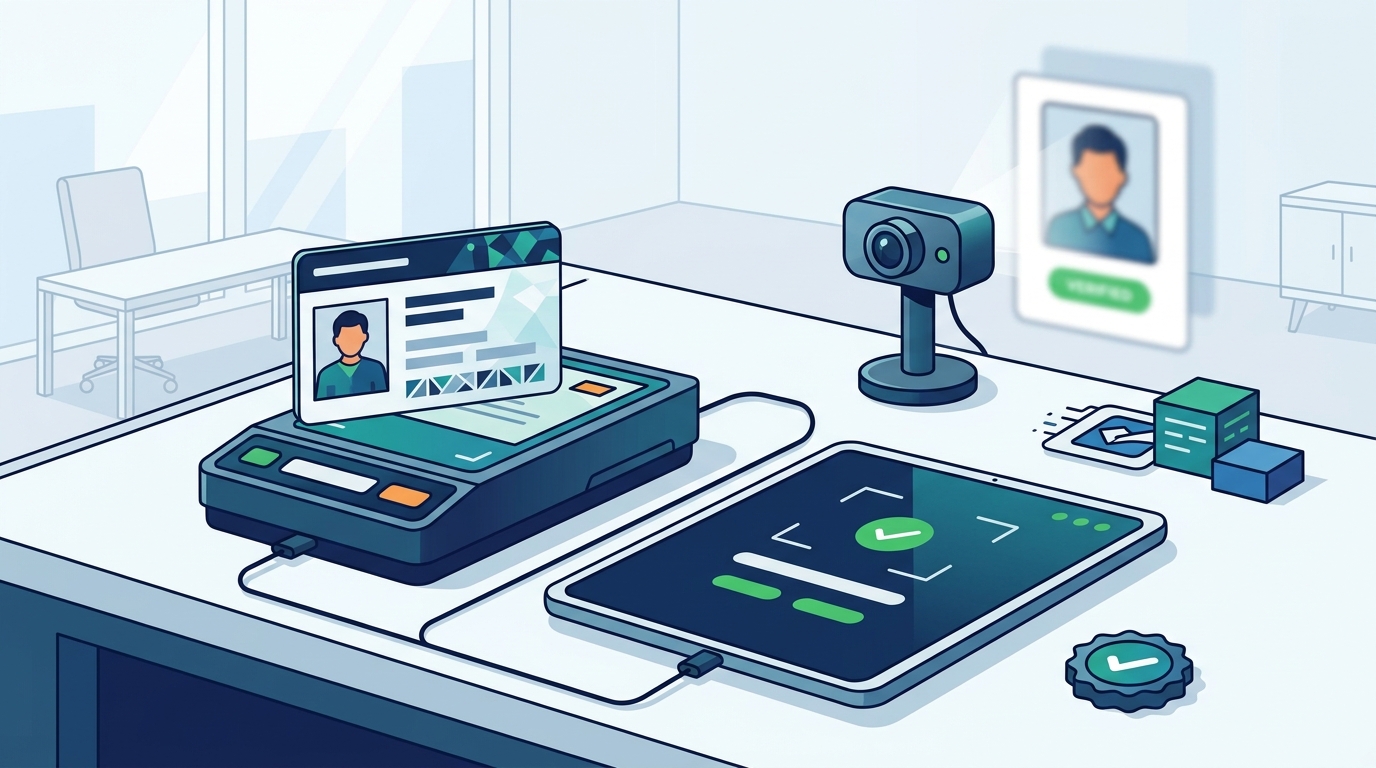
One of the most common methods is scanning government-issued IDs. Candidates upload a photo of their driver's license or passport. Software then checks the document's authenticity, looking for holograms, fonts, and other security features. This method is fast and widely accepted across industries.
Biometric Matching
Biometric verification adds a layer of security by comparing a live photo or video of the candidate against their ID photo. This ensures that the person holding the ID is the owner. Biometric matching is particularly useful for remote hiring, where physical presence is not an option.
Video Skill Demonstrations
A newer approach involves requiring candidates to record video demonstrations of their skills. This method verifies identity through facial recognition and simultaneously proves capability. It combines identity verification with skills assessment, streamlining the hiring process.
The Proof-First Hiring Model
The concept of "proof-first" hiring is gaining traction as a solution to the identity and skills gap. This model requires candidates to provide verifiable evidence of their identity and abilities before any interview takes place.
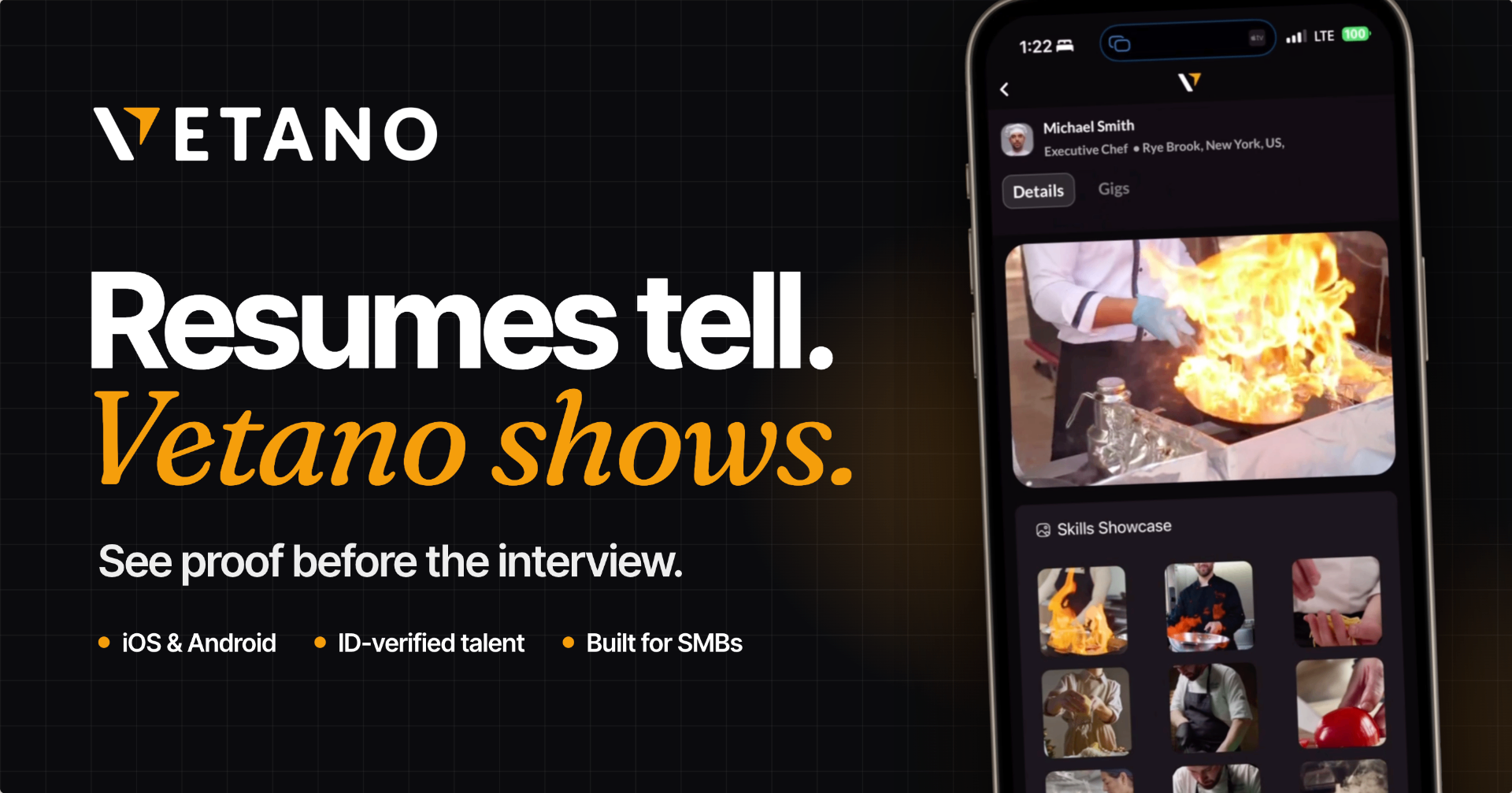
Vetano operates on this principle. The platform requires ID verification for all candidates. This ensures that employers are interacting with real people. Additionally, candidates submit skill videos that demonstrate their work. This provides employers with tangible proof of capability, reducing the risk of hiring unqualified individuals.
This approach shifts the burden of proof from the employer to the candidate. It creates a more efficient hiring pipeline where both parties have confidence in the data. Employers spend less time filtering out fake profiles and more time engaging with qualified talent.
Verification Methods Compared
Choosing the right verification method depends on the industry and the role. Below is a comparison of common approaches.
| Method | Verification Level | Best For | Cost |
|---|---|---|---|
| ID Scanning | High | Compliance-heavy roles | Low |
| Biometric Video | Very High | Remote hiring | Medium |
| Skill Videos | High | Trades and creative roles | Variable |
| Background Checks | Very High | Final stage hiring | High |
Each method has its place. ID scanning is essential for compliance. Biometric video is ideal for remote teams. Skill videos provide a unique advantage for roles where visual proof is critical. Combining these methods creates a robust verification strategy.
Key Takeaways
- Identity fraud is a growing risk that requires proactive verification strategies.
- Traditional resumes do not verify identity or skills, creating a significant gap in hiring.
- Digital tools like ID scanning and biometric matching offer high-security verification.
- The proof-first model combines identity verification with skills assessment for efficiency.
- Vetano provides a platform for ID-verified candidates to showcase their skills via video.
- Choosing the right verification method depends on the specific industry and role requirements.
- Implementing verification early in the hiring process saves time and reduces risk.
Frequently Asked Questions
Is online identity verification secure?
Yes, modern online identity verification uses encryption and biometric technology to ensure security. It is often more secure than manual document checks.
How long does the verification process take?
Digital verification can be completed in minutes. ID scanning and biometric checks are automated, providing instant results for most candidates.
Can I verify skills online?
Yes, platforms like Vetano allow candidates to submit video demonstrations of their skills. This provides employers with visual proof of capability.
What is the proof-first hiring model?
Proof-first hiring requires candidates to provide verified evidence of their identity and skills before any interview. It shifts the burden of proof to the candidate.
Does Vetano verify identity?
Yes, Vetano requires all candidates to undergo ID verification. This ensures that employers are interacting with real, verified individuals.
How do I choose a verification tool?
Consider the industry, the role, and the level of risk. Compliance-heavy roles may require stricter verification, while creative roles may benefit more from skill demonstrations.
Is video verification legal?
Yes, video verification is legal in most jurisdictions, provided it complies with local privacy laws. Employers should always inform candidates about the verification process.
Start Verifying Today
Stop guessing who your applicants are. Start hiring with proof. Vetano offers a streamlined platform for ID-verified candidates to showcase their skills. Explore our about page to learn more about our mission. Discover how our AI infrastructure workforce solutions can help your business. Check out our automotive hiring resources for industry-specific insights. Learn about our barbershop hiring tools for salon owners. Read our blog for the latest trends in proof-first hiring. Visit Vetano to get started.