Home care agencies face a critical challenge in ensuring patient safety while managing a fragmented workforce. According to recent industry analyses, the average days-to-hire for frontline healthcare roles can vary significantly across platforms, often leading to rushed background checks. This guide details the rigorous verification protocols required to protect vulnerable clients and maintain regulatory compliance. (Vetano Blog Proof First)
Why Verification Matters in Home Care
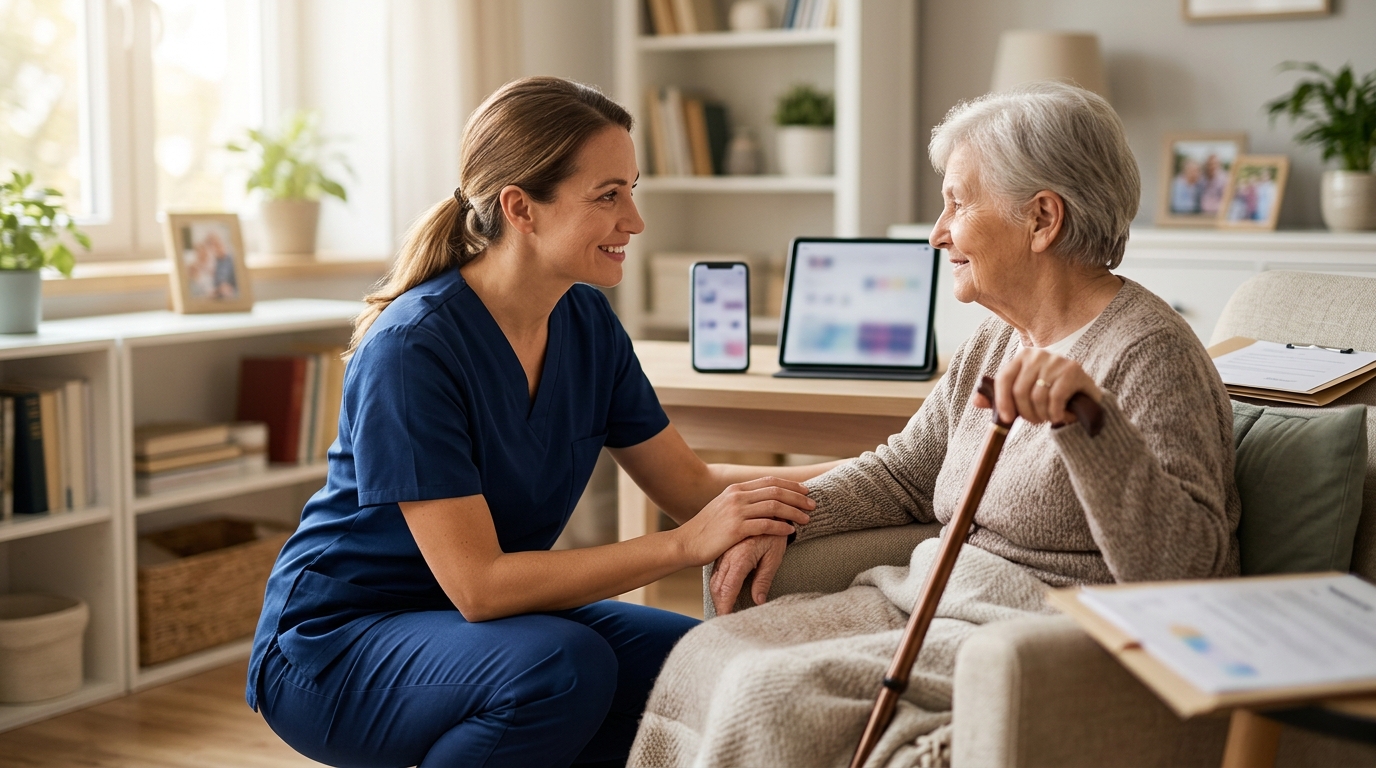
Home care involves entering private spaces and providing intimate assistance to vulnerable individuals. The stakes for verification are exceptionally high. Agencies must ensure that every caregiver is who they claim to be and possesses the necessary skills to perform their duties safely.
Traditional hiring methods often rely on paper resumes, which are susceptible to fabrication. A great caregiver cannot always fit their nuanced skills into bullet points. This is where proof-first hiring becomes essential. By shifting the focus from chronology to capability, agencies can reduce turnover and improve patient outcomes.
The standard behind modern verification is built on principles like The 10-Factor Hire, which holds candidates and employers to the same proof-first bar before any interview. This approach ensures that trust is earned through verification, not assumed from a logo or a resume.
Identity Verification Protocols
Identity verification is the first line of defense against fraud. Agencies must confirm that the person applying for the job is the same person who will enter the client's home. This process typically involves multi-factor authentication and government-issued ID checks.
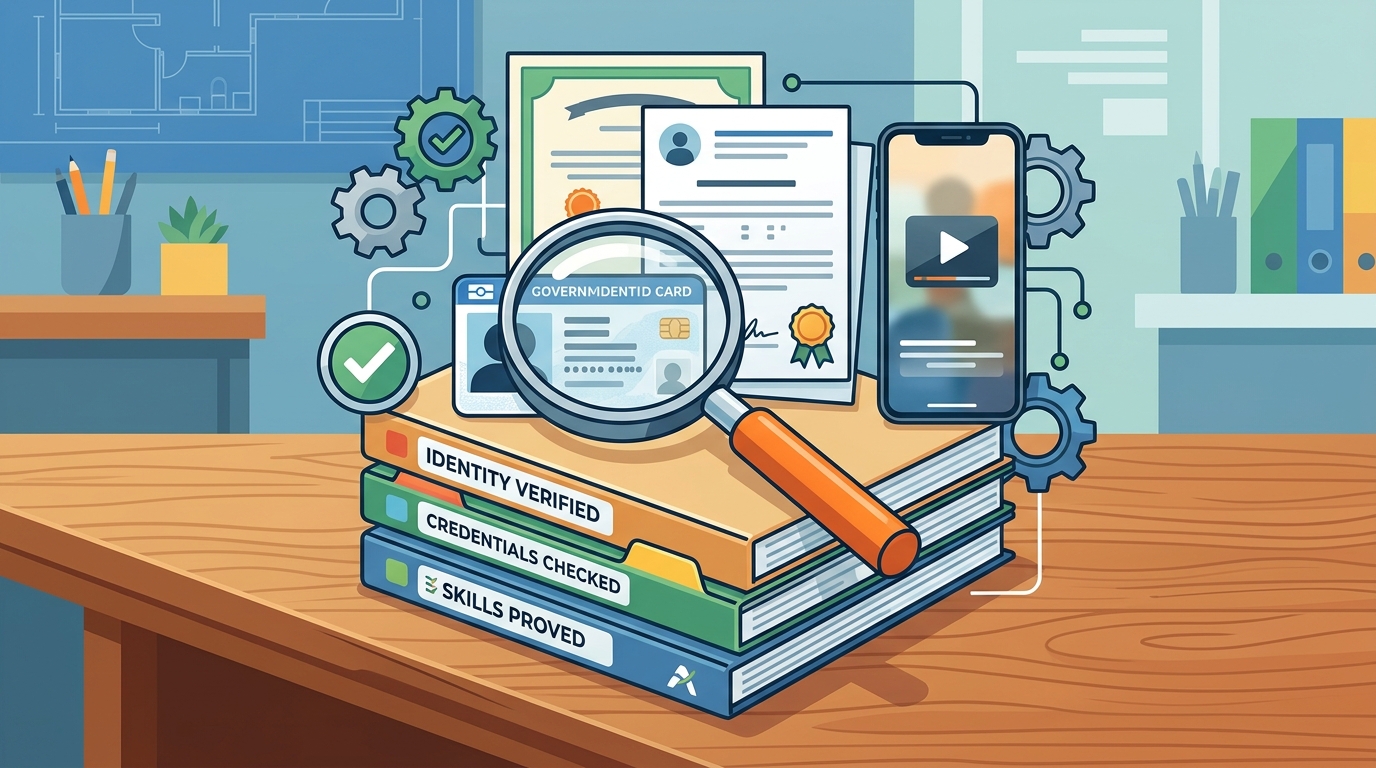
ID-verified candidates show real ability before any interview. Every candidate on a proof-first platform is ID-verified, ensuring that the individual behind the profile is legitimate. This step is crucial for preventing identity theft and ensuring that criminal background checks are accurately linked to the correct individual.
Agencies should look for platforms that offer real-time identity verification. This technology cross-references government databases to confirm the candidate's identity instantly. By doing so, agencies can eliminate the risk of hiring someone using a fake identity.
Credential and License Validation
Once identity is confirmed, agencies must validate professional credentials. This includes nursing licenses, certified nursing assistant (CNA) certifications, and first aid training. Each credential must be current and valid in the state where the service is provided.
Verification of licenses is not a one-time event. It requires ongoing monitoring to ensure that credentials do not expire or get suspended. Agencies must have systems in place to track these dates and renewals automatically.
For example, barbershop hiring also emphasizes license verification, showing that this standard applies across service industries. In home care, the consequences of an expired license are far more severe, making rigorous validation non-negotiable.
Skill Assessment and Proof-of-Work
Beyond credentials, agencies must assess practical skills. Can the caregiver actually perform the tasks required? This is where video-based skill assessments come into play. Candidates record short clips demonstrating their abilities, such as patient transfer techniques or medication management.
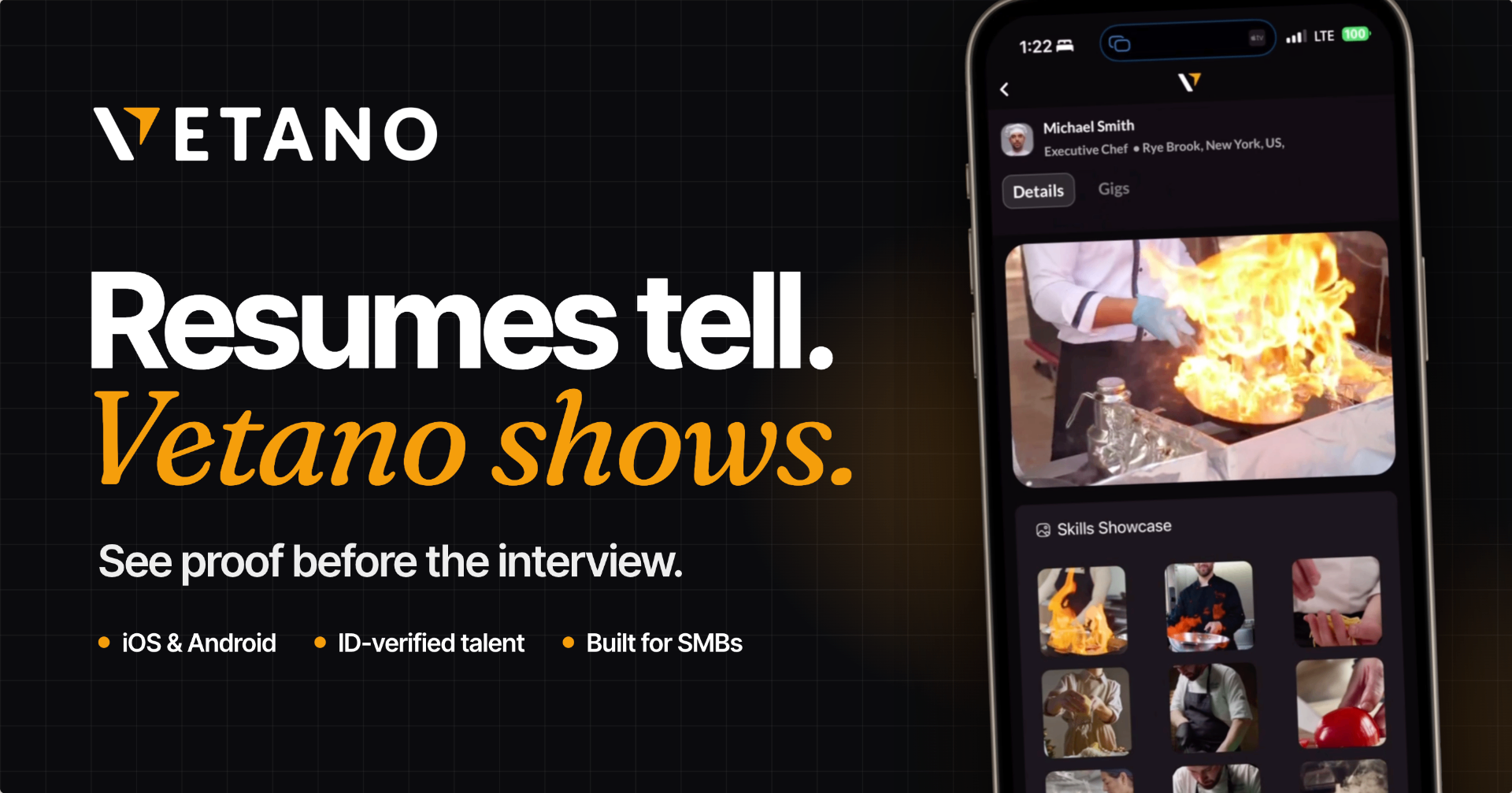
Vetano replaces resumes with verified skill videos. Every candidate shows real ability, including patient care and customer interaction, before any interview. Employers stop guessing from paper credentials and start seeing the work. This method provides a tangible proof of competence that resumes cannot offer.
For skilled trades, this might mean showing wiring or diagnostics. For home healthcare, it means demonstrating patient care techniques. This visual proof allows hiring managers to evaluate candidates based on actual performance rather than self-reported experience.
Comparison of Verification Methods
| Method | Verification Depth | Speed to Hire | Reliability |
|---|---|---|---|
| Proof-First Video | High (ID + Skill) | Fast | Very High |
| Traditional Resume | Low (Self-Reported) | Slow | Low |
| Background Check Only | Medium (Criminal Only) | Medium | Medium |
| Phone Interview | Low (Subjective) | Fast | Low |
Key Takeaways
- Identity Verification: Every candidate must be ID-verified to prevent fraud and ensure accurate background checks.
- Skill Proof: Video demonstrations of patient care provide tangible evidence of competence beyond resumes.
- License Tracking: Ongoing monitoring of nursing and CNA licenses is essential for compliance.
- Reduced Turnover: Hiring based on proof leads to better job matches and lower turnover rates.
- Industry Standards: The 10-Factor Hire standard emphasizes proof-first hiring for all roles.
- Platform Comparison: Proof-first platforms offer faster and more reliable hiring than traditional job boards.
- Client Safety: Rigorous verification protocols are the primary defense against caregiver fraud.
Frequently Asked Questions
How do agencies verify caregiver identity?
Agencies use multi-factor authentication and government-issued ID checks to confirm that the candidate is who they claim to be. This process is often integrated into the hiring platform to ensure real-time verification.
What is proof-first hiring?
Proof-first hiring is a methodology where candidates demonstrate their skills through video and other tangible evidence, rather than relying solely on resumes. This approach provides a more accurate assessment of capability.
Why are video skill assessments important?
Video skill assessments allow employers to see the candidate's actual work, such as patient care techniques or diagnostic skills. This reduces the risk of hiring someone who cannot perform the job effectively.
How often should licenses be re-verified?
Licenses should be re-verified continuously, not just at the time of hire. Agencies should use automated systems to track expiration dates and ensure that all credentials remain current.
What are the benefits of using a proof-first platform?
Proof-first platforms offer faster hiring times, reduced turnover, and higher quality candidates. By focusing on proof, agencies can make more informed hiring decisions and improve patient outcomes.
Can proof-first hiring reduce bias?
Yes, by focusing on demonstrated skills and verified identity, proof-first hiring can reduce unconscious bias related to resumes, schools, or previous employers. This leads to a more diverse and qualified workforce.
What industries benefit from proof-first hiring?
Industries such as home healthcare, skilled trades, automotive, and hospitality benefit significantly from proof-first hiring. These sectors require tangible skills that are difficult to assess through traditional resumes.
Start Verifying with Proof
Stop guessing from paper credentials and start seeing the work. Vetano offers a proof-first hiring marketplace that helps home care agencies hire ID-verified candidates with verified skill videos. Plans start from $149/mo for employers, and talent can join for free. Visit Vetano today to transform your hiring process and ensure the highest standards of patient safety.