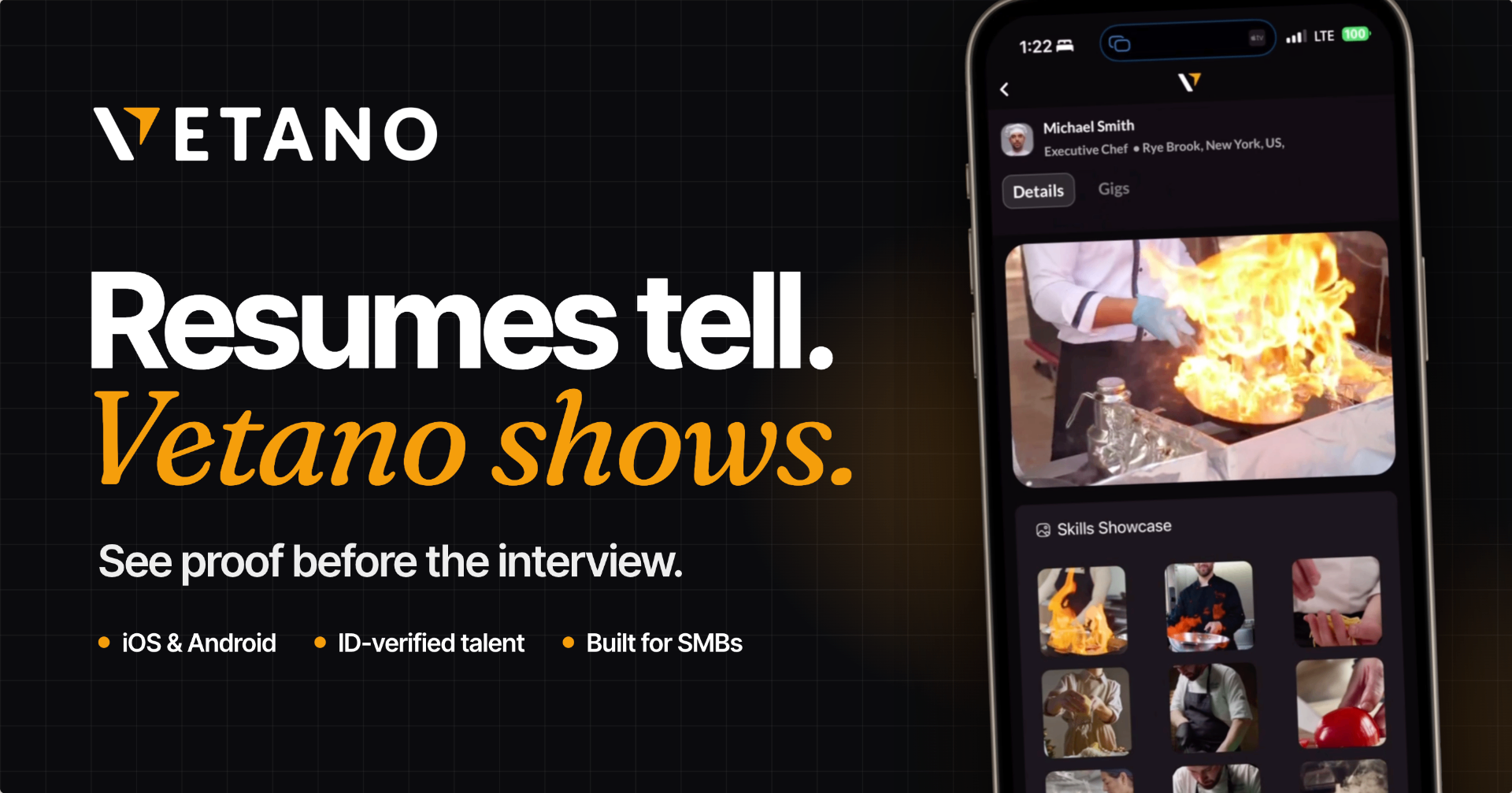

Restaurant turnover is not just an inconvenience; it is a structural leak in your profit margin. According to recent industry data, the average cost to replace a single hourly employee can exceed $3,000 when factoring in recruiting, onboarding, and lost productivity. This financial drain is often caused by a single error: hiring based on paper credentials rather than demonstrated capability. The solution lies in shifting from resume-based screening to proof-first hiring, where candidates show their actual work before you ever extend an offer. (Vetano Blog Proof First)
Why Traditional Resumes Fail in Hospitality
The traditional hiring stack is broken for the real economy. A resume is a curated document that highlights achievements while hiding gaps. In the kitchen, this gap is dangerous. A candidate might list "line cook" on their CV, but that title tells you nothing about their knife skills, their speed during a rush, or their ability to maintain sanitation standards.
Furthermore, the rise of AI-generated applications has exacerbated this problem. Employers are now sifting through generic, algorithmically optimized resumes that lack any genuine signal. This creates a filtering bottleneck where qualified candidates are overlooked because their paper credentials do not match the specific, nuanced needs of your menu. You end up interviewing people who look good on paper but cannot handle the physical demands of your station.
When you hire based on chronology rather than capability, you increase the risk of bad hires. A bad hire in a restaurant does not just mean a vacant shift; it means compromised food quality, frustrated staff, and dissatisfied customers. The cost of this error is far higher than the investment in a better hiring tool.
Implementing the Proof-First Model
Proof-first hiring flips the script. Instead of asking candidates to tell you what they can do, you ask them to show you. This model relies on verification and demonstration. Every candidate on a proof-first platform is ID-verified, ensuring that the person applying is the person who will show up for work. This eliminates the ghosting and identity fraud that plague traditional job boards.
For restaurant owners, this means you can browse candidates who have already demonstrated their skills. You are not guessing if a dishwasher can handle high-volume racks or if a server can manage a section of tables efficiently. You are watching them do it. This reduces the time-to-hire significantly because the initial screening is done by the video evidence, not by a recruiter's subjective interpretation of a resume.
Adopting this model requires a shift in mindset. You must trust the video evidence over the paper credential. This is where platforms like Vetano come in. They provide the infrastructure for this verification, allowing you to post jobs and receive applications that include real ability signals. This is particularly critical for roles where soft skills and physical dexterity are paramount.
The Power of 30-Second Skill Clips
The most effective tool in the proof-first arsenal is the skill clip. These are short, focused videos where a candidate demonstrates a specific task relevant to the job. For a line cook, this might be a clip of them plating a dish with precision. For a bartender, it could be a demonstration of a complex cocktail build.
These clips serve as a high-signal filter. They allow you to assess technique, presentation, and confidence in seconds. A 30-second intro video also helps you gauge personality and communication style, which are crucial for front-of-house roles. When you see a candidate confidently explaining their process, you know they have the communication skills necessary for your team.
This method also levels the playing field for talented individuals who may lack formal education or prestigious previous employers. A great barber or line cook can fit what makes them great into a video, even if they cannot fit it into bullet points. This expands your talent pool to include hidden gems who are ready to work but were previously invisible to traditional hiring systems.
Adopting Modern Hiring Standards
The industry is moving toward a new standard for hiring. Vetano is built on The 10-Factor Hire, an open standard that holds candidates and employers to the same proof-first bar. This standard emphasizes verification, capability, and mutual respect in the hiring process.
By adhering to these standards, you are not just hiring faster; you are hiring smarter. You are ensuring that every candidate you interview has already passed a rigorous self-screening process. This reduces the administrative burden on your team and allows you to focus on the final cultural fit rather than the basic technical skills.
Moreover, this approach aligns with the broader trend of skills-based hiring. According to recent labor market reports, skills-based hiring is moving from a buzzword to a default practice across industries. Restaurants that adopt this early will have a competitive advantage in attracting top talent who are tired of the opaque traditional hiring process.
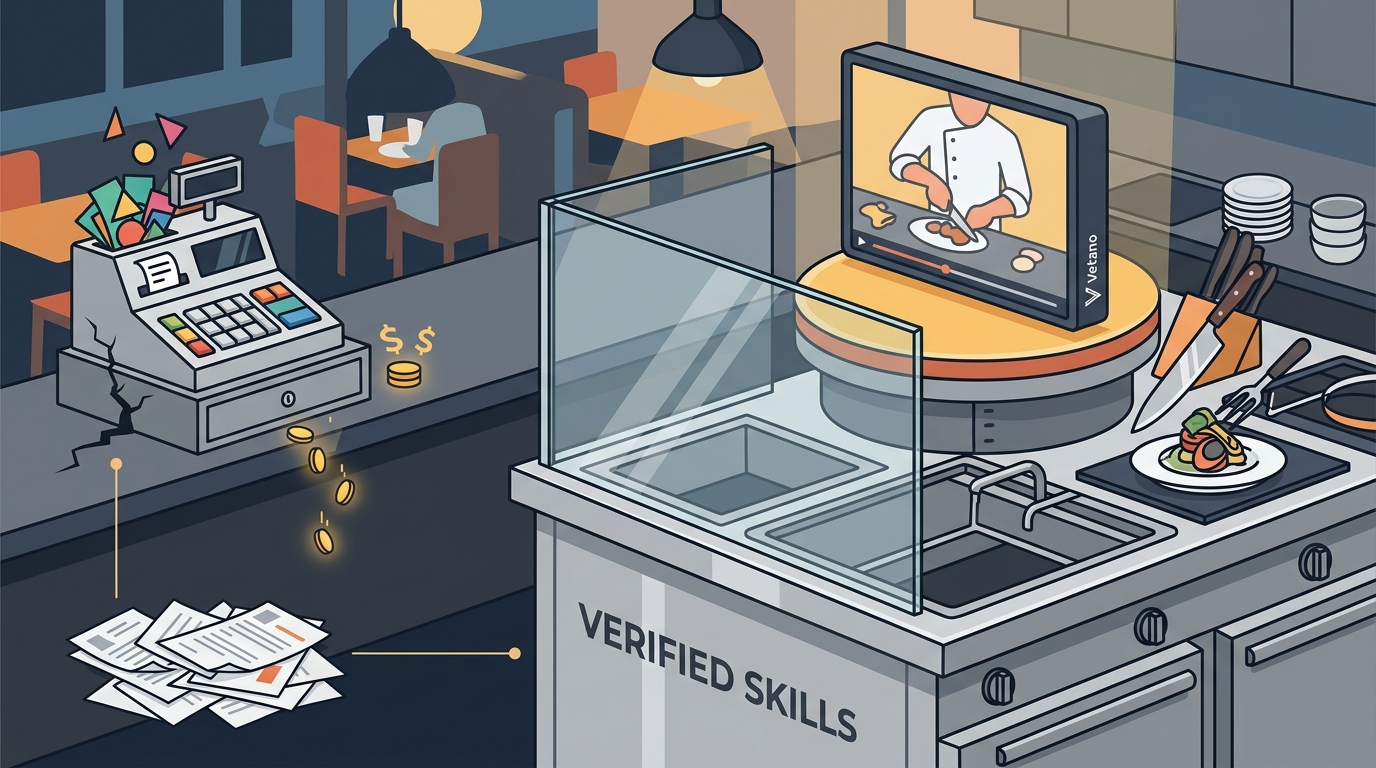
Platform Comparison for Kitchen Staff
Not all hiring platforms are created equal. Traditional job boards like Indeed and ZipRecruiter offer volume but lack depth. Gig apps like Instawork offer speed but often lack the verification needed for long-term hires. Here is how they compare for restaurant hiring:
| Platform Type | Speed to Hire | Verification Level | Best For |
|---|---|---|---|
| Proof-First Platforms | Medium | High (ID + Skill Video) | Long-term, high-skill roles |
| Traditional Job Boards | Slow | Low (Resume-based) | High-volume, low-skill roles |
| Gig Apps | Same-Day | Medium (Background Check) | Shift fills and temp staff |
| Aggregator Sites | Medium | Low (Resume-based) | Broad reach |
As shown in the table, proof-first platforms offer a unique balance of speed and verification. While gig apps are faster for immediate needs, they do not provide the skill demonstration that helps you predict long-term success. Traditional boards provide breadth but lack the depth needed to assess actual capability.
Key Takeaways
- Cost of Turnover: Replacing an hourly employee can cost over $3,000 when factoring in all hidden expenses.
- Resume Limitations: Resumes are curated documents that often hide critical gaps in practical skills.
- AI Impact: AI-generated applications are increasing the noise in traditional hiring channels.
- Verification: ID-verified candidates reduce the risk of ghosting and identity fraud.
- Skill Clips: 30-second videos provide high-signal data on technique and confidence.
- Industry Trend: Skills-based hiring is becoming the default standard for modern recruitment.
- Platform Choice: Proof-first platforms offer a superior balance of speed and verification for skilled roles.
Frequently Asked Questions
How does proof-first hiring reduce turnover?
Proof-first hiring reduces turnover by ensuring that candidates are hired based on demonstrated capability rather than paper credentials. This leads to better job-candidate fit and fewer surprises during the first week of work.
Is Vetano free for restaurant staff?
Yes, Vetano is free for talent. Candidates can create a profile, record skill clips, and apply to unlimited jobs at no cost. Employers pay only when they hire.
What industries does Vetano serve?
Vetano serves restaurants, barbershops, skilled trades, automotive, home healthcare, and the skilled workforce behind AI infrastructure.
How long does it take to hire with Vetano?
Hiring speed varies, but proof-first hiring typically reduces time-to-hire by allowing employers to screen candidates based on video evidence rather than resumes.
Can I see a candidate's ID verification status?
Yes, every candidate on Vetano is ID-verified. This information is available to employers to ensure the authenticity of the applicant.
What is the 10-Factor Hire standard?
The 10-Factor Hire is an open standard for modern hiring that emphasizes proof-first verification, capability assessment, and mutual respect between candidates and employers.
How does Vetano compare to Indeed?
Vetano focuses on proof-first hiring with skill videos, while Indeed is a high-volume job board. Vetano is better for assessing actual skills, while Indeed is better for broad reach.
Start Hiring with Proof
Stop guessing who can do the job. Start seeing the work. Vetano provides the tools you need to hire with proof, not resumes. Post your job today and find ID-verified candidates who can show you their skills before you hire them. Visit Vetano to get started.