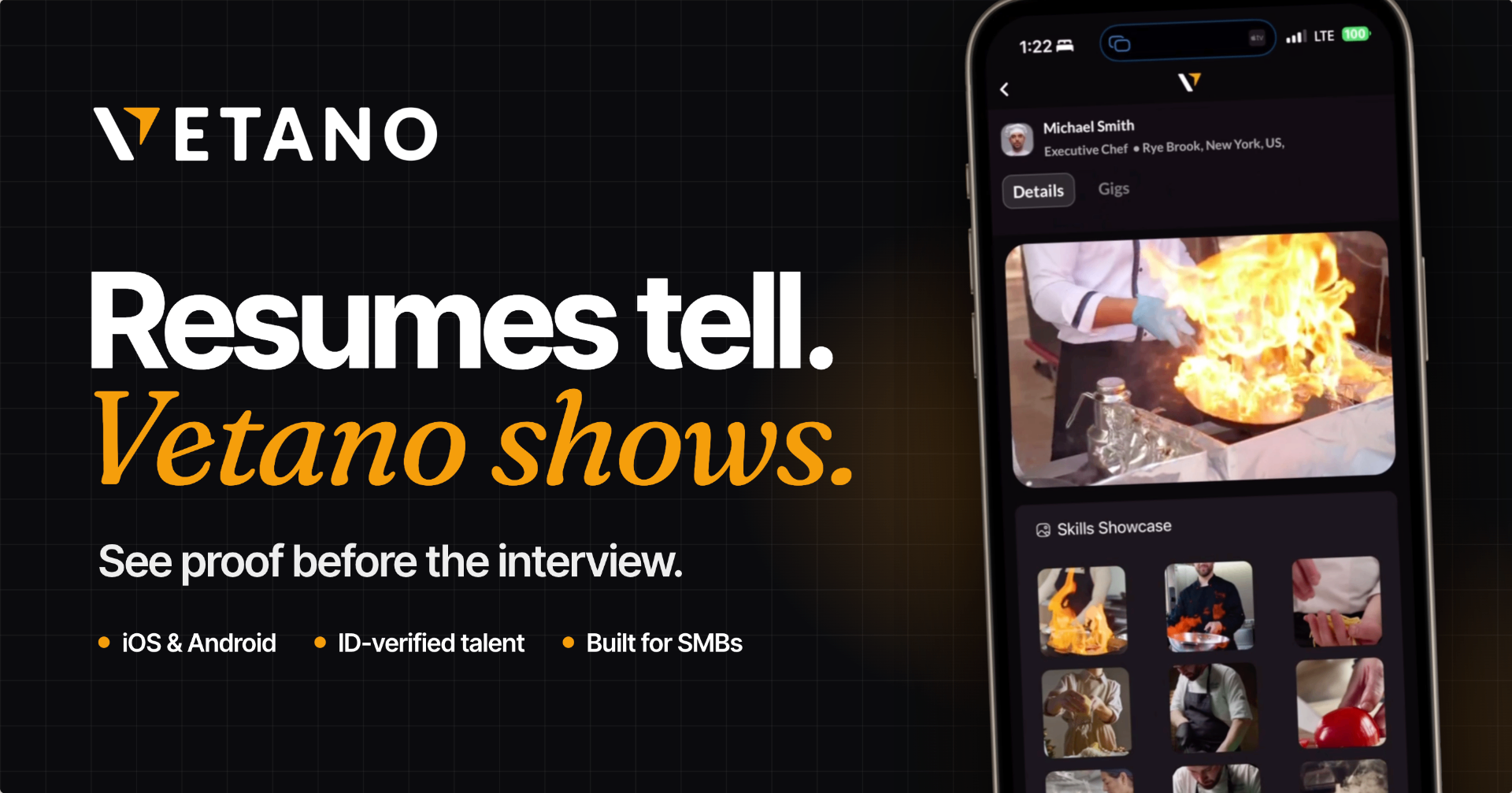

Traditional resume screening fails to capture actual capability, leading to costly hiring mistakes in skilled trades and service industries. According to recent workforce data, over 60% of hiring managers report that resumes no longer accurately reflect a candidate's ability to perform core job functions. This disconnect creates a critical gap in the hiring process where employers must guess at competence rather than observe it. By shifting to a proof-first model, organizations can eliminate this uncertainty and make data-driven decisions before committing to a single interview hour.
Why Resumes Fail to Verify Skills
The standard resume is a static document that relies on self-reporting. It lists duties and dates but never demonstrates execution. In high-stakes roles, this lack of visible proof leads to significant operational risks. Employers often spend weeks screening applications only to discover during the interview that the candidate lacks the practical nuance required for the role.
Furthermore, the rise of AI-generated applications has exacerbated this issue. Candidates can now easily fabricate experience or use automated tools to pad their credentials. This makes it nearly impossible for recruiters to distinguish between genuine expertise and polished fiction. The result is a hiring process that is slow, biased, and fundamentally disconnected from actual job performance.
When you rely solely on text-based credentials, you are filtering for writing ability rather than job ability. A skilled electrician or a master barber may have poor writing skills but exceptional technical proficiency. By ignoring video proof, you inadvertently exclude the very talent you need. This is why modern hiring strategies are moving away from chronology and toward capability.
The Proof-First Hiring Model
Proof-first hiring replaces the resume with verified skill videos. This model requires candidates to demonstrate their work through short, ID-verified video clips. The core definition of this approach is simple: capability must be shown, not told. This ensures that every candidate in your pipeline has already passed a basic threshold of competence.
At the foundation of this system is identity verification. Before a candidate can upload a skill demonstration, their identity is confirmed. This prevents fraud and ensures that the person performing the task is the person applying for the job. This layer of trust is essential for industries like healthcare and skilled trades where safety and reliability are paramount.
The second component is the skill video itself. These are short clips, typically 30 seconds to two minutes, that show the candidate performing a core task. For a welder, this might be a clip of a clean bead. For a server, it might be a demonstration of table setup. This visual evidence provides immediate signal about quality, technique, and professionalism. It allows employers to see the work before the interview.
This approach also levels the playing field for non-traditional candidates. Individuals who lack elite degrees or prestigious brand names on their resumes can still compete based on raw skill. This expands the talent pool and helps organizations find hidden gems who are capable but overlooked by traditional screening tools.
Steps to Implement Skill Verification
Transitioning to a proof-first hiring strategy requires a structured approach. You must define what success looks like for each role and then build the verification process around those metrics. Here is how to operationalize this shift effectively.
1. Define Core Competencies
Start by breaking down each role into its most critical tasks. What are the top three things a successful employee must do daily? For a HVAC technician, this might be diagnosing a system, explaining the issue to a client, and performing the repair. These become the criteria for the skill video. Avoid vague requirements and focus on observable actions.

2. Select the Right Platform
Not all hiring platforms support video verification equally. You need a tool that integrates ID verification with video hosting and employer review workflows. Look for platforms that specialize in the real economy, such as trades, hospitality, and healthcare. Vetano is built specifically for this purpose, offering a proof-first hiring marketplace that connects ID-verified candidates with employers. You can explore their platform features to see how it streamlines this process.
3. Create Clear Submission Guidelines
3. Create Clear Submission GuidelinesProvide candidates with precise instructions for their video submissions. Specify the angle, lighting, and specific tasks to demonstrate. Ambiguity leads to poor quality videos that are hard to evaluate. Clear guidelines ensure that every candidate is evaluated on the same basis, reducing bias and improving the signal-to-noise ratio for your hiring team.
4. Review and Score
Establish a scoring rubric for the videos. Train your hiring managers to look for specific technical indicators rather than general impressions. This could include the precision of a cut, the clarity of communication, or the safety protocols followed. By standardizing the review process, you ensure consistent quality across all hires.
Industry-Specific Verification Strategies
Different industries require different types of proof. A one-size-fits-all approach rarely works because the nature of the work varies significantly. Here is how proof-first hiring applies to key sectors.
Skilled Trades and Construction
In trades like electrical, plumbing, and welding, precision is non-negotiable. A resume cannot show the quality of a weld or the neatness of a wire run. Video proof allows employers to see the actual workmanship. This is particularly important for the AI infrastructure workforce, where data center buildouts require highly skilled technicians who can demonstrate their expertise in real-time.
Hospitality and Restaurants
For kitchen staff and servers, soft skills and speed are just as important as technical ability. A video can show how a candidate handles a busy station or interacts with a customer. This helps employers assess cultural fit and operational efficiency before bringing the candidate on-site. You can read more about reducing restaurant turnover through proof-first hiring.
Automotive and Repair
Auto technicians must demonstrate diagnostic logic and repair precision. Video walkthroughs of a diagnostic process allow employers to see how the candidate thinks. This reduces the risk of misdiagnosis and ensures that the technician has the right tools and knowledge. Vetano offers specialized automotive hiring solutions that focus on these technical demonstrations.
Barbershops and Salons
In the beauty industry, aesthetics are everything. Employers need to see the actual cut, fade, or color application. Fake portfolios are common, but video proof is undeniable. This allows shop owners to fill empty chairs with verified talent quickly. Learn more about barbershop hiring strategies that prioritize real skill.
Comparing Verification Platforms
Choosing the right platform is critical for successful implementation. Below is a comparison of how different approaches handle skill verification.
| Platform Type | Verification Method | Best For | Limitations |
|---|---|---|---|
| Proof-First Marketplaces | ID-Verified Skill Videos | Trades, Hospitality, Real Economy | Requires candidate adoption |
| Traditional Job Boards | Resume Screening | General Corporate Roles | No skill demonstration |
| Video Interview Tools | Pre-recorded Q&A | Soft Skills Assessment | Does not show technical work |
| Skills-Based Assessments | Online Tests | Technical/Coding Roles | Can be gamed by AI |
Proof-first marketplaces like Vetano offer a distinct advantage for the real economy. They combine identity verification with visual proof, creating a higher signal than traditional job boards. This is particularly valuable for hiring HVAC technicians and other skilled roles where visual proof is essential.
Key Takeaways
- Resumes are increasingly unreliable due to AI generation and self-reporting bias.
- Proof-first hiring uses ID-verified skill videos to demonstrate actual capability.
- Identity verification is the foundation of trust in remote skill assessment.
- Skilled trades benefit most from visual proof of technical workmanship.
- Vetano offers a specialized platform for proof-first hiring in the real economy.
- Clear submission guidelines are critical for consistent video quality.
- Video proof reduces time-to-hire by filtering out unqualified candidates early.
Frequently Asked Questions
How does ID verification work in skill videos?
ID verification confirms the identity of the person recording the video. This prevents fraud and ensures that the candidate is the one performing the skill. It typically involves matching a government ID to a live selfie or video feed.
Can skill videos replace the interview entirely?
Skill videos replace the initial screening phase, not the entire interview. They allow employers to see the work before the interview, making the subsequent conversation more focused and efficient. You can learn more about identity verification in home care for deeper insights.
What industries benefit most from proof-first hiring?
Industries that rely on physical skills, such as trades, hospitality, and automotive, benefit the most. These roles require visible proof of competence that resumes cannot provide.
How long should a skill video be?
Short videos between 30 seconds and two minutes are ideal. They should focus on a single, specific task. Longer videos often lose viewer attention and dilute the signal.
Is proof-first hiring expensive?
Platforms like Vetano offer free profiles for talent and pay-per-hire models for employers. This reduces upfront costs compared to traditional staffing agencies. You can check pricing details for more information.
How do I evaluate the quality of a skill video?
Use a standardized rubric based on the core competencies of the role. Look for precision, safety, and professionalism. Training your hiring team on what to look for is essential.
What is the 10-Factor Hire standard?
The 10-Factor Hire is an open standard for modern hiring that holds candidates and employers to the same proof-first bar. It emphasizes verification and capability over credentials. Read more about the 10-Factor Hire standard.
Start Verifying Today
Stop guessing and start seeing. Verify candidate skills before scheduling an interview with a proof-first hiring platform. Vetano connects you with ID-verified talent who show their work on video. Book a demo to see how proof-first hiring can transform your recruitment process.