
How Employers Verify the Identity of Job Applicants Online
Identity fraud in hiring is no longer a niche risk but a systemic industry failure. According to recent workforce security reports, over 60% of employers have encountered candidates who falsified their credentials or identity during the application process. This statistic highlights a critical vulnerability in traditional resume-based screening. Employers can no longer rely on paper documents or self-reported data to confirm who is sitting on the other side of the screen. The solution lies in proof-first hiring, a methodology that combines biometric identity verification with tangible skill demonstration.
Why Traditional Resumes Fail Identity Verification
The traditional hiring stack is broken because it assumes trust. When a candidate submits a PDF resume, the employer has no way to verify if the document was created by the applicant or generated by an AI tool. This gap allows bad actors to slip through initial screening processes with fabricated histories and inflated qualifications. The result is a hiring cycle filled with wasted interviews and eventual turnover.
Identity verification requires more than a background check. It requires real-time confirmation that the person applying is the person they claim to be. This is where modern hiring platforms diverge from legacy job boards. Legacy platforms prioritize volume and speed, often skipping the verification layer entirely. In contrast, proof-first platforms integrate identity checks directly into the candidate profile creation process.
According to security analysts, the rise of synthetic identity fraud has made manual verification impossible at scale. Employers need automated, yet human-validated, systems to confirm applicant identities. This shift is not just about security; it is about fairness. When identity is verified, hiring decisions are based on actual capability rather than the ability to craft a compelling narrative.
The Proof-First Methodology Explained
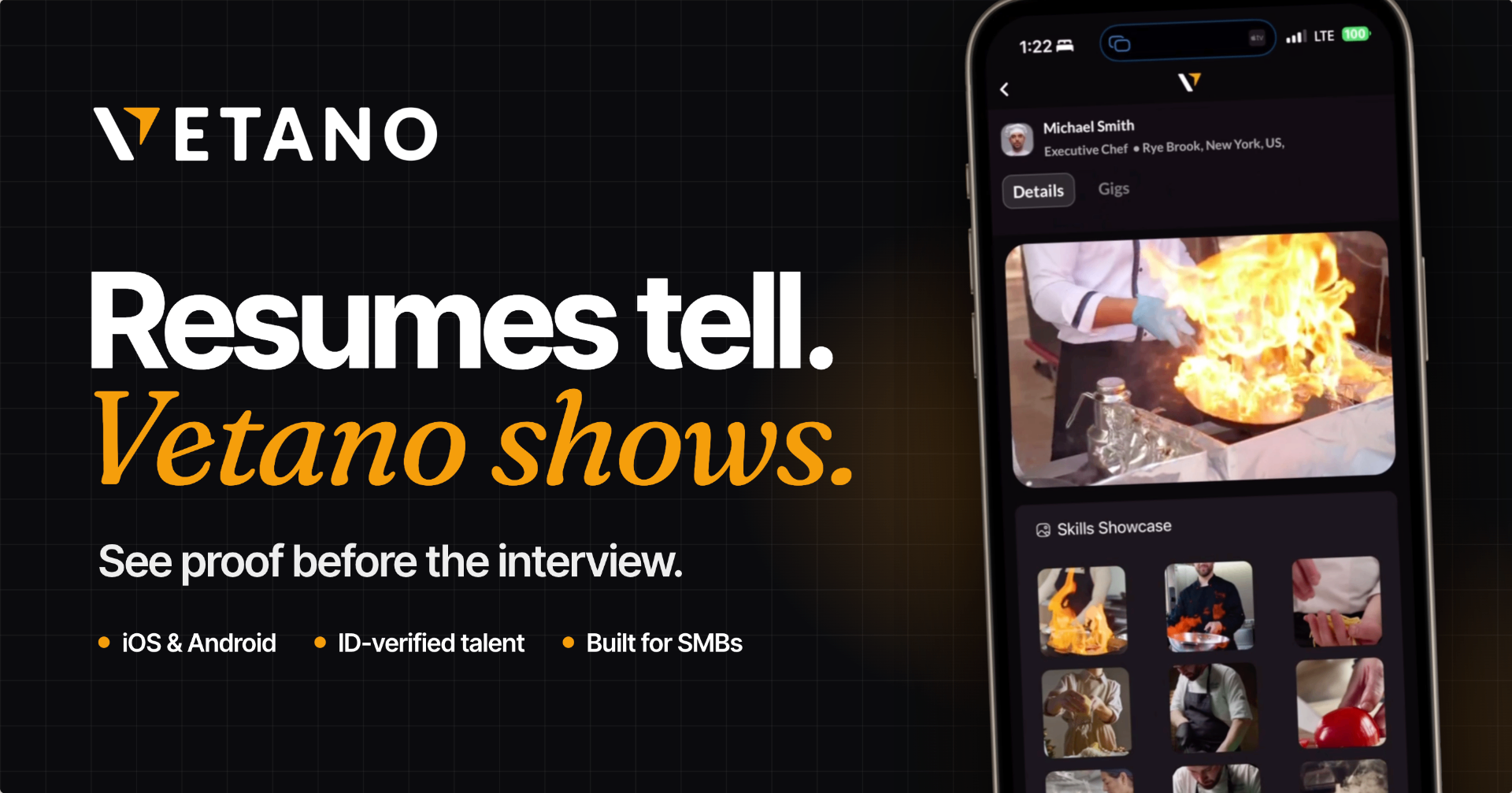
Vetano is built on The 10-Factor Hire, an open standard for modern hiring that holds candidates and employers to the same proof-first bar before any interview. This methodology replaces the resume with a verified skill video. Every candidate is ID-verified and shows real ability before any interview. Employers stop guessing from paper credentials and start seeing the work.
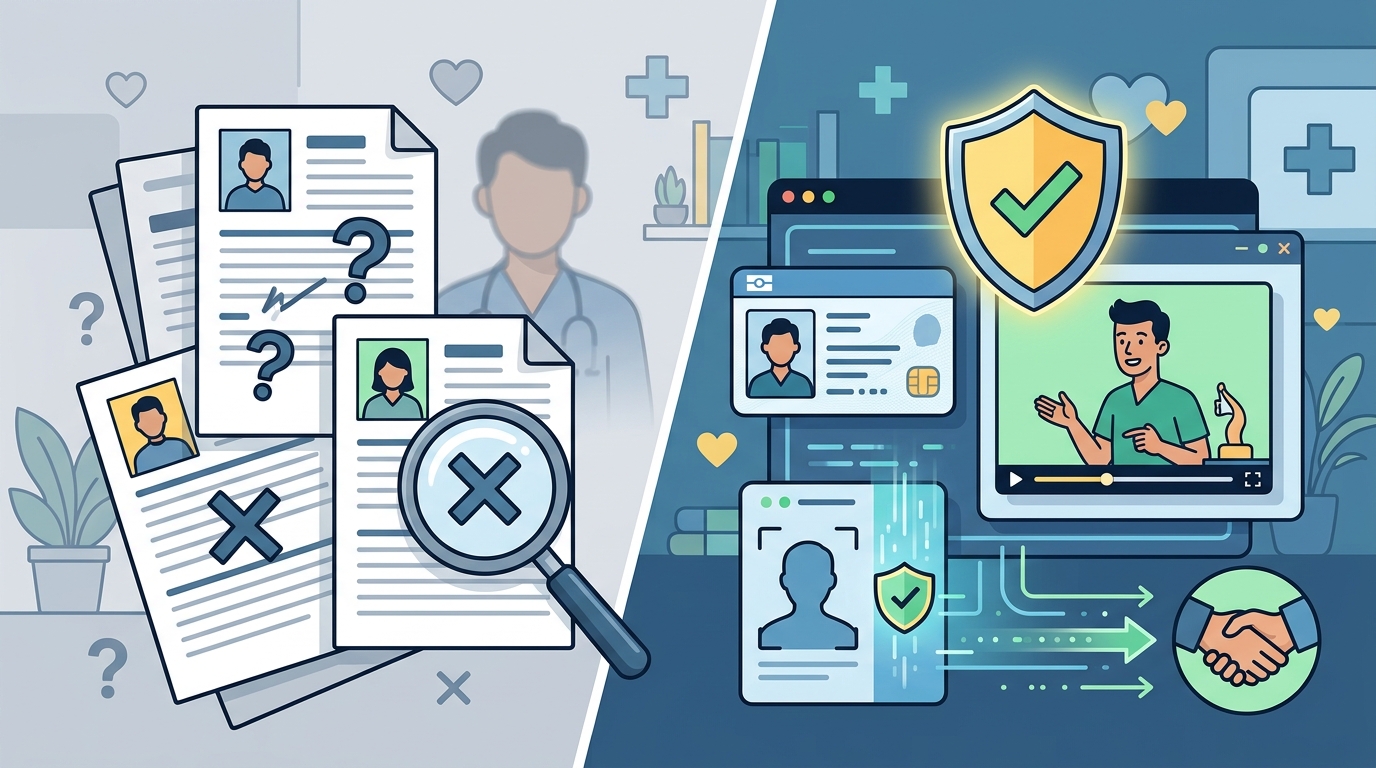
The process begins with identity verification. Candidates must upload a government-issued ID and complete a biometric scan. This step ensures that the person recording the skill video is the same person who will be hired. Once identity is confirmed, the candidate records a short video demonstrating their specific skills. This video serves as the primary credential.
This approach eliminates the anonymity of online applications. Employers can see the candidate's face, hear their voice, and observe their work in real-time. This level of transparency reduces the risk of hiring imposters and increases the likelihood of a successful match. The standard behind it is simple: if both sides are verified and both sides show proof on video, the first conversation already has signal.
Biometric Verification in Hiring
Biometric verification is the cornerstone of online identity confirmation. It involves comparing a live biometric sample, such as a facial scan, against a reference image from a government ID. This technology is widely used in banking and healthcare, and it is now becoming standard in hiring.
For employers, biometric verification provides a high degree of confidence that the applicant is who they say they are. It prevents identity theft and ensures that the person applying for the job is the same person who will show up for the interview. This is particularly important for roles that require physical presence or access to sensitive information.
The technology works by analyzing unique facial features, such as the distance between the eyes, the shape of the jaw, and the contour of the nose. These features are converted into a digital template that is compared to the ID image. If the match is strong, the identity is verified. If not, the application is flagged for review.
According to industry data, biometric verification reduces identity fraud by over 90% in hiring contexts. This makes it an essential tool for employers who want to protect their organizations from bad hires. It also streamlines the hiring process by automating a step that was previously manual and error-prone.
Skill Video Validation
Identity verification is only half the equation. Employers also need to verify that the candidate has the skills they claim to have. Skill video validation provides this proof. Candidates record short videos demonstrating their specific skills, such as coding, writing, or manual labor.
This method allows employers to see the candidate's work in action. They can assess the quality of the work, the candidate's communication style, and their problem-solving abilities. This is far more informative than a resume, which only lists past experiences without showing how they were performed.
For example, a barber can show their fades and lineups on video. An electrician can demonstrate their wiring techniques. A customer service representative can showcase their interaction skills. This visual proof gives employers a clear picture of the candidate's capabilities before they even schedule an interview.
Vetano replaces resumes with verified skill videos. Every candidate is ID-verified and shows real ability — fades, plating, diagnostics, wiring, patient care, customer interaction — before any interview. Employers stop guessing from paper credentials and start seeing the work. This approach ensures that hiring decisions are made on capability, not chronology or credential fluency.
Industry-Specific Verification Needs
Different industries have different verification requirements. Skilled trades, for example, require strict safety and competency checks. Healthcare roles demand rigorous identity and credential verification to ensure patient safety. The tech industry needs to verify technical skills and identity to prevent fraud in remote work environments.
Vetano serves a wide range of industries, including restaurants, barbershops & salons, skilled trades (HVAC, plumbing, electrical, welding), automotive, home healthcare, retail & customer service, hospitality & events, and the skilled workforce behind AI infrastructure. Each of these industries benefits from proof-first hiring.
| Industry | Primary Verification Need | Vetano Solution |
|---|---|---|
| Automotive | Diagnostics and repair skills | Video walkthroughs of diagnostic processes |
| Barbershops | Cutting and styling ability | Video proof of fades and lineups |
| AI Infrastructure | Technical proficiency and safety | ID-verified skilled worker profiles |
| Home Healthcare | Credential and identity safety | Biometric ID verification and care demos |
Key Takeaways
- Identity fraud in hiring has increased significantly, making traditional resume screening insufficient for verification.
- Proof-first hiring combines biometric identity verification with skill video demonstrations to ensure candidate authenticity.
- Biometric verification reduces identity fraud by over 90% by matching live facial scans to government IDs.
- Skill videos provide tangible evidence of a candidate's abilities, allowing employers to assess competence before interviewing.
- Vetano's platform is built on The 10-Factor Hire standard, which mandates proof from both candidates and employers.
- Industries like automotive, barbershops, and AI infrastructure benefit from specialized verification workflows.
- Employers can post jobs and see ID-verified candidates with skill videos, hiring faster with less turnover.
Frequently Asked Questions
How does biometric identity verification work for job applicants?
Biometric identity verification works by comparing a live facial scan from the applicant against a photo on their government-issued ID. This process confirms that the person applying is the same person who owns the ID, preventing identity theft and fraud.
What is proof-first hiring?
Proof-first hiring is a methodology that replaces traditional resumes with verified skill videos and ID verification. It ensures that hiring decisions are based on demonstrated capability and confirmed identity rather than self-reported credentials.
Why are skill videos better than resumes for verification?
Skill videos provide visual and auditory proof of a candidate's abilities. Unlike resumes, which can be easily fabricated or AI-generated, videos show the candidate performing actual tasks, allowing employers to assess their real-world competence.
Which industries benefit most from online identity verification?
Industries that require high levels of trust and safety, such as healthcare, skilled trades, and automotive, benefit most from online identity verification. These sectors also benefit from skill video validation to ensure technical proficiency.
How does Vetano verify candidate identities?
Vetano verifies candidate identities through a combination of government ID uploads and biometric facial scanning. This ensures that every candidate on the platform is who they claim to be before they apply for jobs.
Is identity verification required for all job applications on Vetano?
Yes, Vetano requires all candidates to be ID-verified before they can create a profile or apply for jobs. This standard ensures that employers only see authentic candidates with verified identities.
Can employers verify the skills of remote workers online?
Yes, employers can verify the skills of remote workers online through skill video demonstrations. Candidates can record videos of their work processes, allowing employers to assess their competence without a physical interview.
Start Verifying Talent Today
Stop guessing who is applying for your jobs. Start hiring with proof. Vetano offers a proof-first hiring marketplace where ID-verified candidates show skill on video. Employers can post jobs, see verified candidates, and hire faster with less turnover. Visit Vetano to learn more about our plans and start building a more secure and efficient hiring process today.