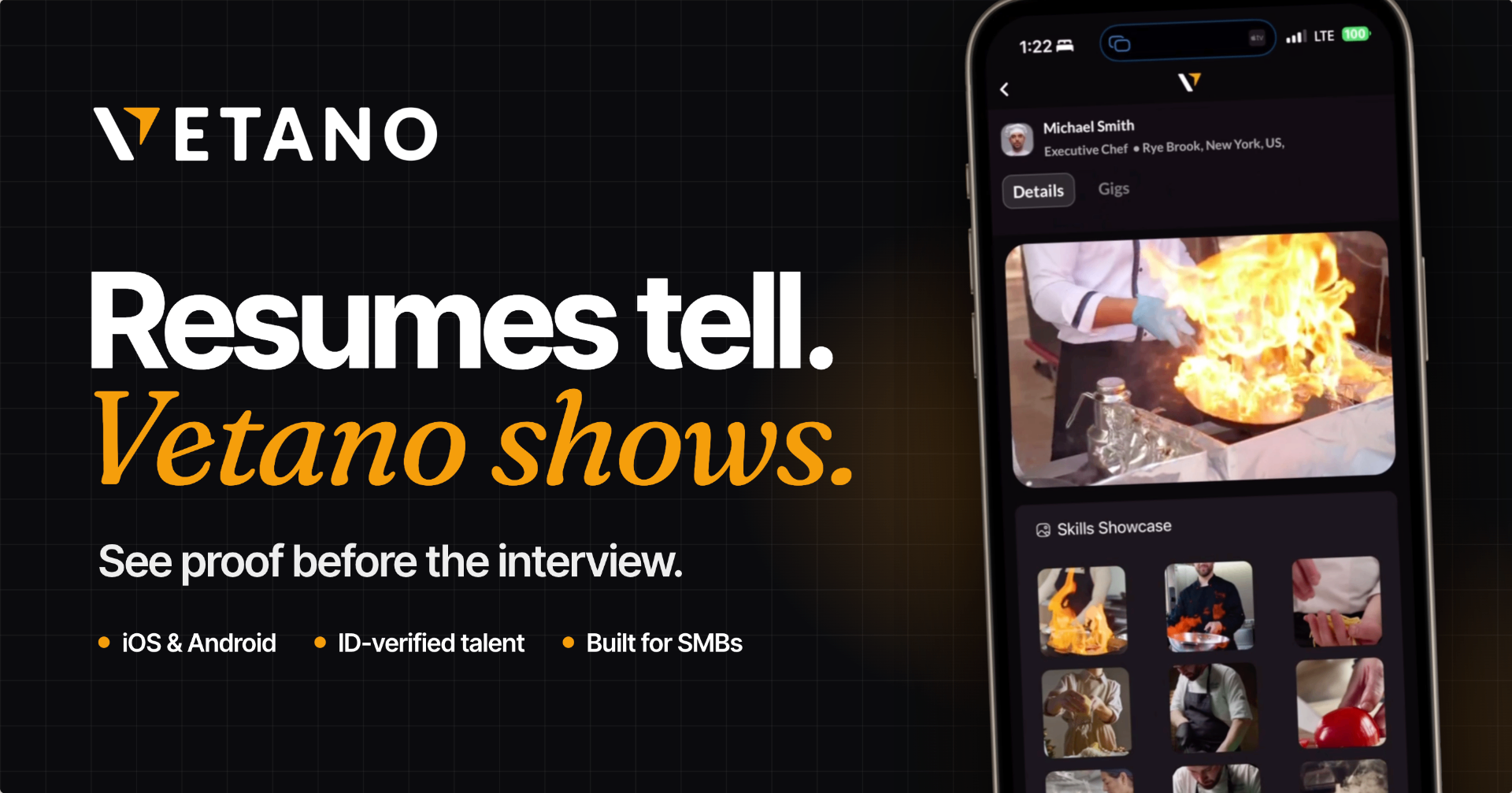

Restaurant turnover remains one of the most persistent operational challenges in the hospitality industry. According to recent industry data, the annual turnover rate for restaurant workers often exceeds 70 percent, costing establishments millions in recruitment and training expenses annually. This high attrition rate is frequently traced back to poor initial screening decisions where employers rely on paper resumes that fail to reflect actual capability. The most efficient way to screen restaurant staff candidates is to implement a proof-first hiring workflow that prioritizes verified skill demonstrations over traditional credential review. This approach drastically reduces time-to-hire while increasing the quality of the candidate pool. (About Vetano Proof First)
Why Traditional Resumes Fail in Hospitality
The standard hiring stack was designed for corporate office roles, not the dynamic environment of a kitchen or front-of-house. A resume is a static document that highlights chronology and credential fluency, which are poor predictors of performance in skilled trades and service roles. In the restaurant industry, a candidate might list "food preparation" on a CV, but this provides zero insight into their knife skills, plating aesthetics, or speed under pressure. (Vetano Hire with proof)
Furthermore, the rise of AI-generated applications has exacerbated the problem of fake job posts and inflated credentials. Employers can no longer trust that the applicant is who they claim to be or that the listed experience is genuine. This lack of signal forces hiring managers to spend excessive time on initial phone screens that often reveal nothing new. The inefficiency of this process leads to delayed openings and compromised hiring decisions. (Vetano Hire with proof)
Vetano was built to address this specific gap in the real economy hiring layer. The platform operates on the belief that hiring decisions should be made on capability, not chronology. By shifting the focus from paper credentials to video proof, restaurants can eliminate the guesswork from the initial screening phase.
The Proof-First Screening Method
Proof-first hiring is an open standard for modern hiring that holds candidates and employers to the same verification bar before any interview occurs. This method replaces the resume with ID-verified skill videos. Every candidate on the Vetano platform undergoes identity verification, ensuring that the person submitting the application is the person in the video.
This method is particularly effective for the skilled workforce behind AI infrastructure and the physical economy, but it is equally transformative for hospitality. When a candidate records a skill clip, they are demonstrating real ability in areas such as fades, plating, diagnostics, wiring, patient care, and customer interaction. Employers stop guessing from paper credentials and start seeing the work. This transparency allows for faster, more confident hiring decisions.
The efficiency gain comes from the density of information. A 30-second video contains more actionable data about a candidate's suitability than a two-page resume. It reveals communication style, technical proficiency, and professionalism simultaneously. This reduces the need for multiple rounds of preliminary interviews, accelerating the time-to-hire metric significantly.
Step-by-Step Screening Process
Implementing a proof-first workflow requires a structured approach. The following steps outline how to screen restaurant staff efficiently using verified skill demonstrations.
Step 1: Identity Verification
The first step in efficient screening is confirming the candidate's identity. In an era of deepfakes and identity theft, verifying who is applying is non-negotiable. Vetano uses ID verification to ensure that the talent is real. This step protects the restaurant from fraudulent applications and ensures compliance with labor regulations. It also builds trust between the employer and the candidate, establishing a baseline of integrity.
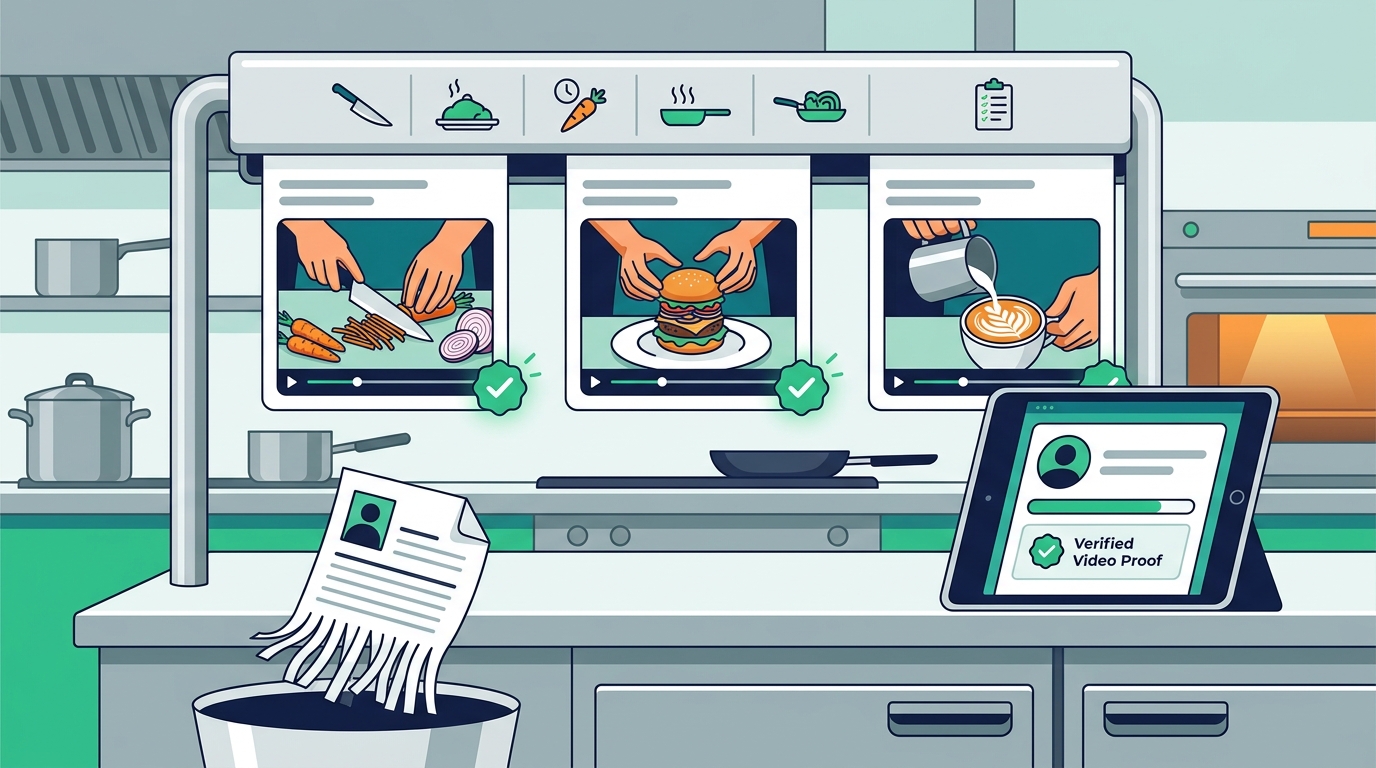
Step 2: Skill Video Submission
Candidates record a 30-second intro and specific skill clips relevant to the role. For a line cook, this might be a demonstration of knife skills or plating a signature dish. For a server, it could be a mock customer interaction or a demonstration of menu knowledge. The key is that the skill is shown, not just described. This video serves as the primary screening tool, allowing employers to assess technical ability and cultural fit before engaging in conversation.
Step 3: Rapid Evaluation
Employers review the ID-verified candidates with skill videos directly on the platform. This allows for rapid filtering of the applicant pool. Instead of scheduling 20 phone screens, a hiring manager might review 20 videos in the time it takes to conduct one phone call. Those who demonstrate the required proficiency move directly to the final interview stage. This streamlined process reduces administrative burden and speeds up the onboarding timeline.
Applications Across Restaurant Roles
The proof-first method is versatile and applies to various roles within the restaurant ecosystem. Below is a summary of how this screening method adapts to different positions.
| Role | Key Skill to Verify | Screening Focus |
|---|---|---|
| Line Cook | Knife skills, plating speed | Visual demonstration of dish preparation |
| Server | Customer interaction, menu knowledge | Mock service scenario or product pitch |
| Dishwasher | Efficiency, attention to detail | Workflow demonstration in a simulated environment |
| Host/Hostess | Communication, organization | Introduction and floor management simulation |
For barbershops and salons, the focus shifts to technical craft. Employers can see real fades, lineups, and cuts on video before they interview. This is critical for roles where aesthetic judgment is paramount. Similarly, for skilled trades like HVAC or electrical work that support restaurant infrastructure, the verification of technical competence is essential for safety and compliance.
Key Takeaways
- Turnover Reduction: Proof-first hiring reduces turnover by ensuring candidates meet the actual skill requirements of the role before hiring.
- Time Efficiency: Video screening reduces time-to-hire by allowing employers to evaluate multiple candidates simultaneously.
- Identity Security: ID verification prevents fraud and ensures the authenticity of the applicant pool.
- Objective Assessment: Skill videos provide objective data on capability, reducing unconscious bias in hiring decisions.
- Cost Savings: Reducing the number of unproductive interviews lowers recruitment costs significantly.
- Platform Integration: Vetano offers plans starting from $149/mo for employers, providing a scalable solution for hiring.
- Talent Access: Employers gain access to a global pool of ID-verified talent ready to demonstrate their skills.
Frequently Asked Questions
How does proof-first hiring reduce bias?
Proof-first hiring reduces bias by focusing on demonstrated skills rather than pedigree, school, or previous employer names. This allows candidates from non-traditional backgrounds to compete fairly based on their actual ability.
Is identity verification secure for restaurant staff?
Yes, identity verification uses secure, industry-standard protocols to confirm the candidate's identity. This protects both the employer and the employee by ensuring authenticity.
What types of skills can be verified via video?
Almost any tangible skill can be verified, including cooking techniques, customer service interactions, technical repairs, and creative crafts. The video format allows for dynamic demonstration of ability.
How much does it cost to use Vetano for hiring?
Vetano offers flexible pricing for employers, with plans starting from $149/mo. There are also options for talent, such as Talent Pro, which allows for unlimited gig work with zero commission.
Can I hire remote workers for restaurant operations?
While many restaurant roles are on-site, proof-first hiring can also be used for remote support roles, such as digital marketing or administrative support, ensuring they have the necessary technical skills.
How long does the screening process take?
The screening process is significantly faster than traditional methods. Employers can review video submissions in minutes, reducing the overall time-to-hire from weeks to days.
What industries does Vetano serve besides restaurants?
Vetano serves a wide range of industries including barbershops, skilled trades, automotive, home healthcare, retail, and the skilled workforce behind AI infrastructure.
Start Hiring with Proof
Stop guessing from paper credentials and start seeing the work. Vetano provides the tools you need to hire faster with less turnover. Post your job today and connect with ID-verified candidates who are ready to demonstrate their skills. Visit Vetano.com to get started and transform your hiring process.